


LITHUANIA SIGNS THE ARMS TRADE TREATY
On June 3, ambassador Raimonda Murmokaitė, Permanent Representative of Lithuania to the United Nations, joined the representatives from more than 60 countries to sign the Arms Trade Treaty at the special event to mark the opening for signature of this treaty.
“Such events, although few and far in between, prove that the UN system is able to rise up to modern challenges and deliver in an area where regulation on the international level was desperately needed”, said ambassador and urged countries to proceed with swift ratification of the text.
The Treaty represents a major achievement preceded by almost 10 years of intense negotiations and will become an important tool that could significantly reduce the humanitarian impact from the irresponsible transfer of weapons.
A staunch supporter of international disarmament and arms control, Lithuania placed particular emphasis on ensuring transparent implementation of the Treaty and inclusion of strong provisions related to gender based violence.
The Treaty will enter into force 90 days following the date of the deposit of the fiftieth instrument of ratification.
Source (above): UN Photo/Eskinder Debebe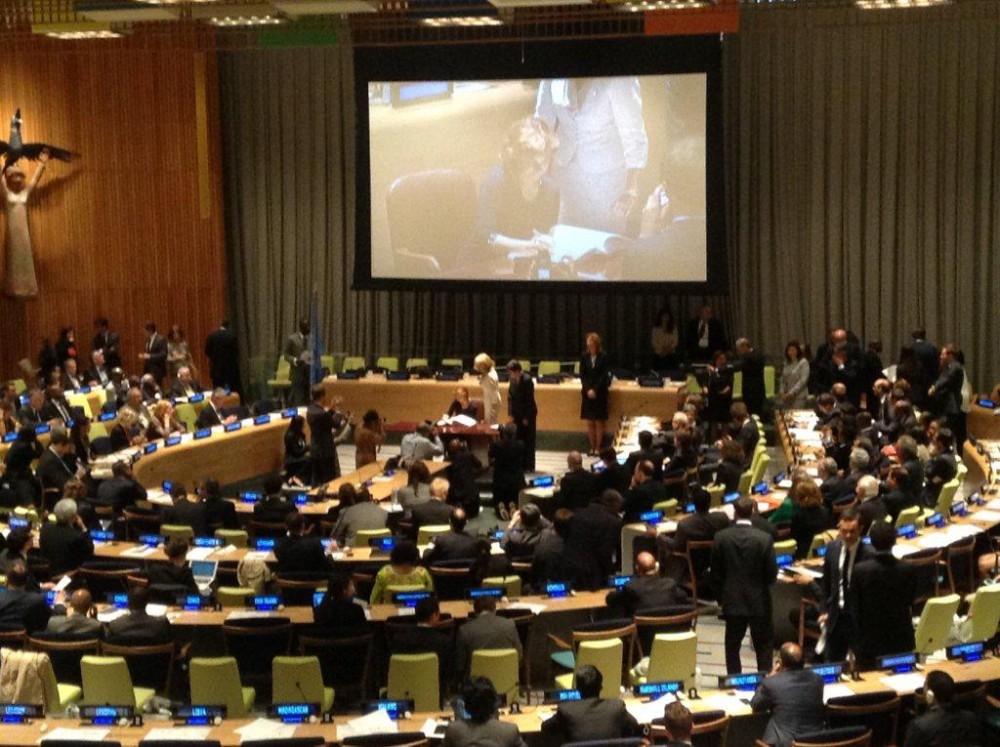
Statement by Permanent Representative of the republic of Lithuania
Ambassador Raimonda Murmokaitė
at the Special Event to Mark the Opening for Signature of the Arms Trade Treaty
3 June 2013
Excellencies, dear colleagues,
Today we signed a legally binding document that we hope will become a powerful tool of ensuring a more responsible arms trade and will contribute to reducing human suffering and promoting international peace and security.
Such events, although few and far in between, prove that the UN system is able to rise up to modern challenges and deliver in an area where regulation on the international level was desperately needed. A significant part of this success is owed to the leadership shown by ambassadors Peter Woolcott and Roberto García Moritán - and to the determination of Member States to engage constructively and with passion for the sake of a common goal.
The treaty, though not perfect, is strong, ambitious and robust. We are pleased that it contains clear prohibitions and strong export control parameters, including references to international humanitarian and human rights law. Regulation of ammunition, parts and components is another significant achievement.
Lithuania also welcomes the fact that gender based violence and violence against women and children are explicitly included among the mandatory export assessment criteria. We remain impressed by the support that this issue gathered during the conference and urge all parties involved to quickly translate this into action.
On this important occasion we also commend the input of civil society, whose passionate and dedicated work during the negotiations was a clear reflection of the ever increasing humanitarian dimension of arms control. As we begin to reflect on the future implementation of the Treaty, a particular area where the role of civil society would be indispensable is transparency. The text of the Treaty opens a way for all essential information to be publicly available. We believe that both Governments and civil society will have the right tools to actively participate in monitoring its implementation.
Completing national procedures required to sign the Treaty in just two months has been an important step forward. Let us not slow down or stop here. We need to proceed towards a swift ratification of the ATT, so we could all start counting down the final 90 days before this life- saving instrument becomes a reality.
Thank you.
