


Lithuania's statement at the 8th session of the conference of state parties to the UN convention on the rights of persons with disabilities
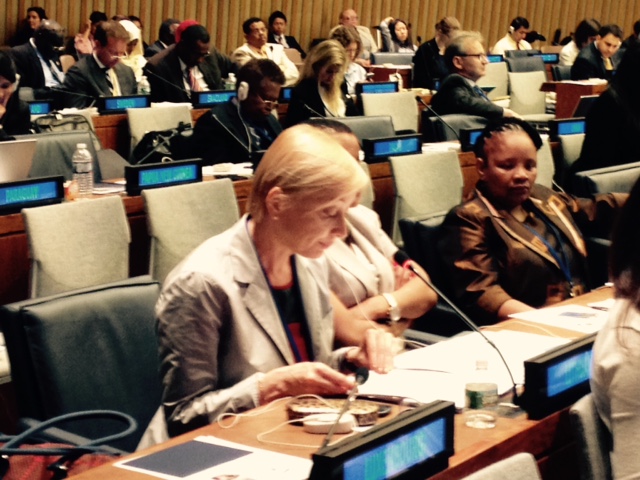
Five years passed since Lithuania has ratified the Convention on the Rights of Persons with Disabilities and its Optional Protocol. Today we can already make some assessment of what has been achieved in the area of social integration and project future perspectives. Our governmental policy in the area of social integration of people with disabilities is targeted at highlighting the personal abilities and social potential of persons with disabilities, promoting their independence, ensuring human rights, community involvement and responsibility.
We try to improve the situation of people with disabilities in the labour market by implementing employment policy which targets to promote employment for all those who are able and willing to work. Active labour market and special measures are being implemented. They aim to provide people with disabilities, willing to integrate into the labour market, with relevant opportunities, necessary assistance and support, and seek for increased social responsibility of employers.
We believe that society, in which the inclusion of all people is encouraged, offers more market opportunities and promotes innovation.
I would like to mention a new social model which is about to be implemented in Lithuania and which entails important reforms in the areas of social security, employment and labour relations. Our innovations are aimed at a single, economically grounded and well-balanced system which would ensure better employment, improvement of labour relations, promotion of investments and job creation. New Lithuanian social model which targets social exclusion and poverty reduction also deals with the issues of social integration of people with disabilities.
The model provides extended list of different types of employment contracts, more flexible organisation of work and regulation of working hours which will be beneficial not only to employers but also to employees with disabilities. Opportunities are offered to facilitate the involvement of disabled people and help them to be more active in the labour market.
In order to ensure more effective integration of vulnerable social groups into the labour market and grant them a personalized approach, active interventions will be chosen. For example, people with disabilities who have sufficient qualifications to meet the labour market demands will be the first to be offered vocational training, subsidized employment, support for improvement of work skills, etc.)
We hope that application of new, more powerful and more effective mechanism will contribute to a comprehensive inclusion of people with disabilities into the employment system in the future.
There are other areas that need more efforts and solutions to be found. First of all, we have to ensure provisions of integrated assistance to people with disabilities and their families. Services of social support, education, employment and health care must be provided to children with disabilities and their families all together by taking into consideration current life situations and needs of such persons. Some measures do not work when they are applied individually and do not provide expected results.
In order an integrated model to work, all state and municipal institutions, people with disabilities and non-governmental organisations who participate in the implementation of the Convention, must take an active part.
The initial report on implementation of the Convention in Lithuania will be presented to the Committee in the first half of 2016. The remarks and recommendations provided will help our country to become more ambitious, make further decisions and take actions so that the Convention is implemented more efficiently and meet the needs of all people with disabilities and their families. There are always more room for improvement.
Thank you for your attention.
