


Lithuania's statement at the UN Security Council briefing on Libya ICC
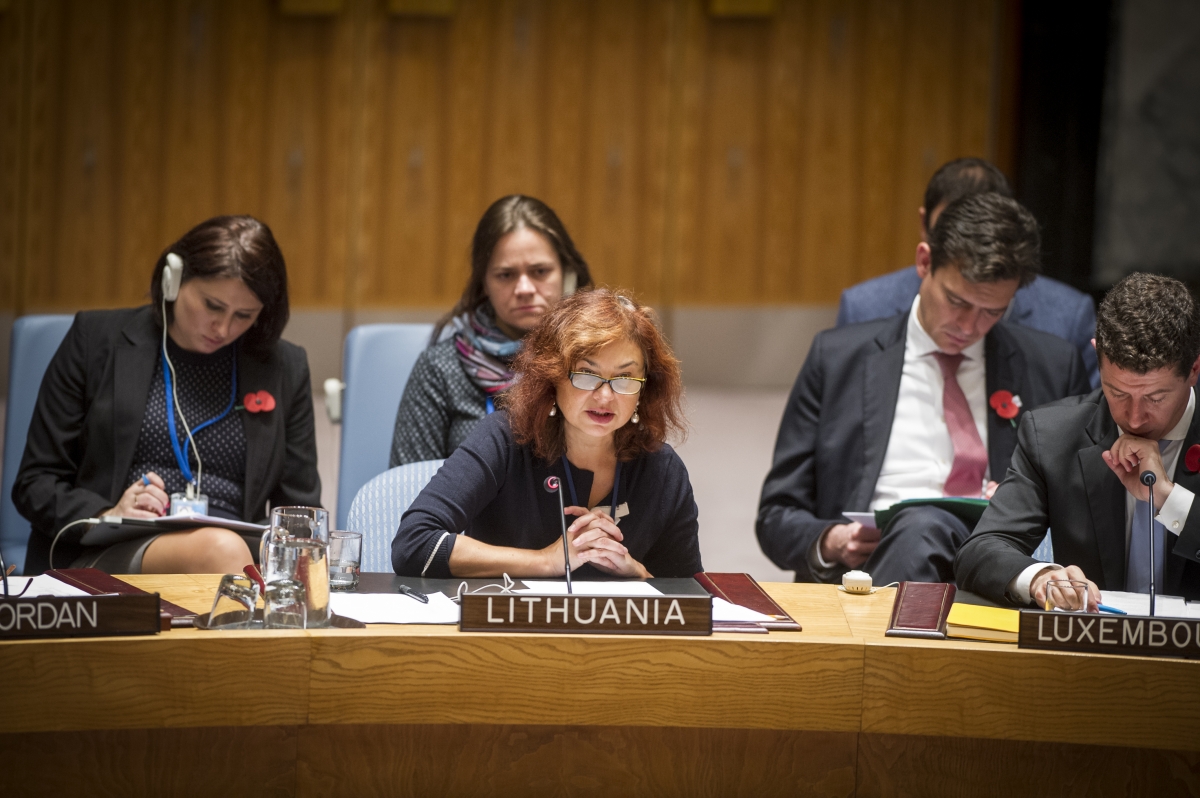
I would like to thank Ms Fatou Bensouda, Prosecutor of the International Criminal Court, for presenting her eighth report to the Security Council. We welcome the ongoing investigation by the Office of the Prosecutor, and its efforts aimed at implementing the Memorandum of Understanding concluded last year, and stress the importance of the Office of the Prosecutor continuing to exercise its jurisdiction over all alleged war crimes, crimes against humanity or any acts of genocide committed within the territory of Libya since 15 February 2011.
The International Criminal Court is an important partner for the Libyan authorities in ensuring accountability. We would like to remind that in accordance with the decision of the Appeals Chamber taken on 21 May this year Libya has an obligation to surrender Saif Al-Islam Al-Qadhafi to the ICC. The obligation to surrender to the Court individuals against whom arrest warrants have been issued should be respected.
In relation to the case of Abdullah Al-Senussi against whom the proceedings before the ICC have been concluded, we would like to express our appreciation of the positive steps taken by the Government of Libya to investigate this case. We hope that in spite of the deteriorating security situation in the country domestic proceedings in Libya can be assured.
We would welcome further regular contacts between the Court and the Libyan authorities on cooperation and burden sharing. It is essential to assist Libyan authorities in strengthening the country’s judicial system, capacity building, and ensuring the impartiality of the judiciary. Strengthening the rule of law and improving criminal justice are core elements of rebuilding state authority in the midst of the current turmoil.
Lithuania remains concerned about the pervasive human rights abuses and criminality including assassinations, abductions of civilians, torture and murder, as well as attacks against civilian infrastructure. The report presented by the Prosecutor notes that fewer than 7000 detainees were held by the judicial police, of which only 10 per cent have been tried. Furthermore, a significant number of detainees, including civilians, remain in the hands of various armed groups, outside the control of or influence by the state. As stressed by the UNSG this past September, handover of all detainees to the effective control of the state is a prerequisite for the establishment of the rule of law in the country.
Let me also briefly refer to the situation of Tawerghans. We take note of the fact that the parliament in Tobruk discussed the return of IDPs, including Tawerghan refugees and that a relevant draft decree is in the making, as indicated in the report. We underline that investigations into related abuses must continue and express our support to the work of the Office of Prosecutor in this respect. We encourage the Government of Libya to take further necessary measures to address the situation, enabling a return home of those displaced. Ensuring the safe return and protection of the Tawerghans must be seen as an important element of national reconciliation.
Mr. President,
Lithuania believes that the Security Council should continue to monitor the events and situations referred to the Court, as well as the potential obstacles that the Court may encounter in conducting its work. We reaffirm our call to investigate all crimes against humanity and serious violations of human rights that may have been committed in Libya. Finding democratic means to resolve past tensions and injustices is essential for the country’s transition and recovery. The international community should also extend all necessary assistance to Libyan authorities for strengthening rule of law and justice institutions which are essential for the country to move faster on the path to reconciliation and restoring trust and cohesion of the complex social fabric of the country.
Allow me to conclude by expressing our strong support and commitment to the International Criminal Court and the work of the Office of the Prosecutor and to reiterate that the United Nations have to ensure proper resources for the investigations in the situations referred to the Court by the Security Council. Making referrals without considering how they are financed could jeopardize the effectiveness of the activities of the Office of the Prosecutor and the Court’s long-term viability.
