


Lithuania's statement delivered in observance of the 30th anniversary of the Chernobyl catastrophe
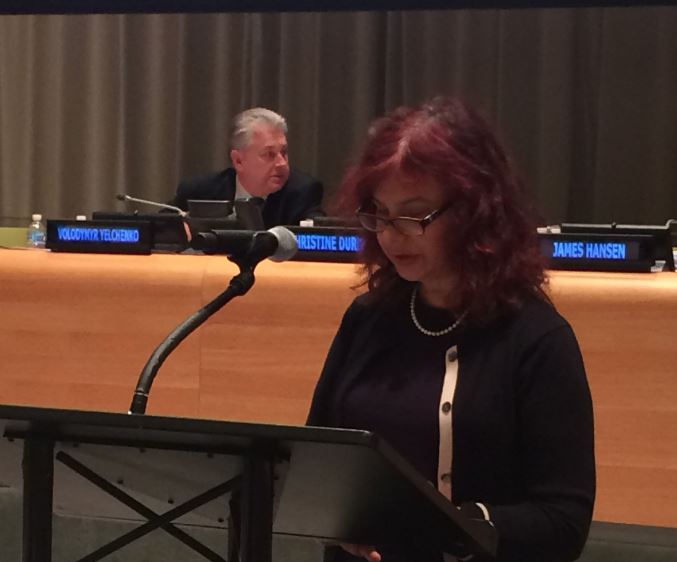
Today we commemorate the 30th anniversary of the nuclear disaster at the Chernobyl nuclear power plant (NPP) – one of the worst disasters in the history of nuclear energy. This commemoration is a most appropriate moment to reflect over the devastating effects of such accidents, to remember all those who had been affected by the disaster and pay our tribute to all those who had to manage the effects of the incident, including the first responders who walked into sure death, without adequate gear and support, to protect others.
More than seven million people and some 63,000 square miles (163,000 square kilometers) of land in Europe have been affected by the nuclear contamination from Chernobyl NPP. More than seven thousand Lithuanians were involved in the emergency response actions.
Some in the region impacted by the Chernobyl nuclear accident, especially closer to the eye of the disaster, still live with its consequences. Power plant area remains a ghost, too risky for humans to return.
Thirty years after the accident we witness the long-term nature of the impact of the disaster which created humanitarian, environmental, social, economic and health consequences.
Lithuania highly appreciates the efforts of the international community aimed at mitigating the consequences of the disaster in Chernobyl. Efforts of the international community in assisting the design and construction of a new, safe confinement (sarcophagus) for the Chernobyl’s reactor are especially important. Lithuania has also made its contribution to the Confinement Fund.
This process of mitigation of the consequences of Chernobyl disaster reminds us of the key issues of our common safety and common concern.
As Chernobyl disaster has clearly demonstrated, nuclear accidents and radiological emergencies have no boundaries. Looking into the future, we must make sure such accidents don’t repeat. We must focus first of all on prevention, while at the same time improving our ability to promptly and effectively respond to nuclear accidents.
Unsafe nuclear facilities can bring huge and long-term damage to societies.
Lithuania insists that after the devastating accidents in Chernobyl (1986) and Fukushima (2011), environmental and nuclear safety, including transboundary impact assessment, in developing NPP projects should not be considered a mere formality but a pressing and immediate urgency.
The lessons of Chernobyl and other nuclear accidents oblige us to develop nuclear technologies in conformity with the spirit and letter of international nuclear safety and security requirements.
To us, nuclear safety in the neighborhood and transboundary impact assessment is a question of national security and indeed our future- no wonder, since a new nuclear power plant is rising a mere 50 km away from the capital city Vilnius- Belarusian Nuclear Power Plant in Ostrovets. Should anything happen, the consequences would be hard to imagine.
We therefore insist that the construction of this plant should strictly comply with the international nuclear security and safety requirements, undergo adequate stress tests, and should not pose a threat to the people of the whole region.
Lithuania is urging appropriate attention of international organizations, first of all the United Nations and the International Atomic Energy Agency, to the development of this NPP project.
Strong commitment to the requirements set by the International Nuclear Energy Agency, the Espoo Convention and other international organisations, is of utmost importance for any country that develops or plans to develop nuclear energy, including our immediate neighbors.
Countries which are only starting to develop nuclear energy programmes should be particularly transparent and cooperative. They should assume responsibility for the safety of their own people as well as for the impact on people of neighboring countries.
Lithuania calls on all the countries that develop nuclear energy to implement the highest international nuclear safety and environmental standards throughout the full nuclear facility cycle and in the most comprehensive manner.
We have seen the immense damage that nuclear accidents can cause, for generations to come. We simply cannot allow a repetition of such disasters.
