


Statement by Lithuania at the UN GA 71st session 3rd Committee General discussion on Advancement of Women
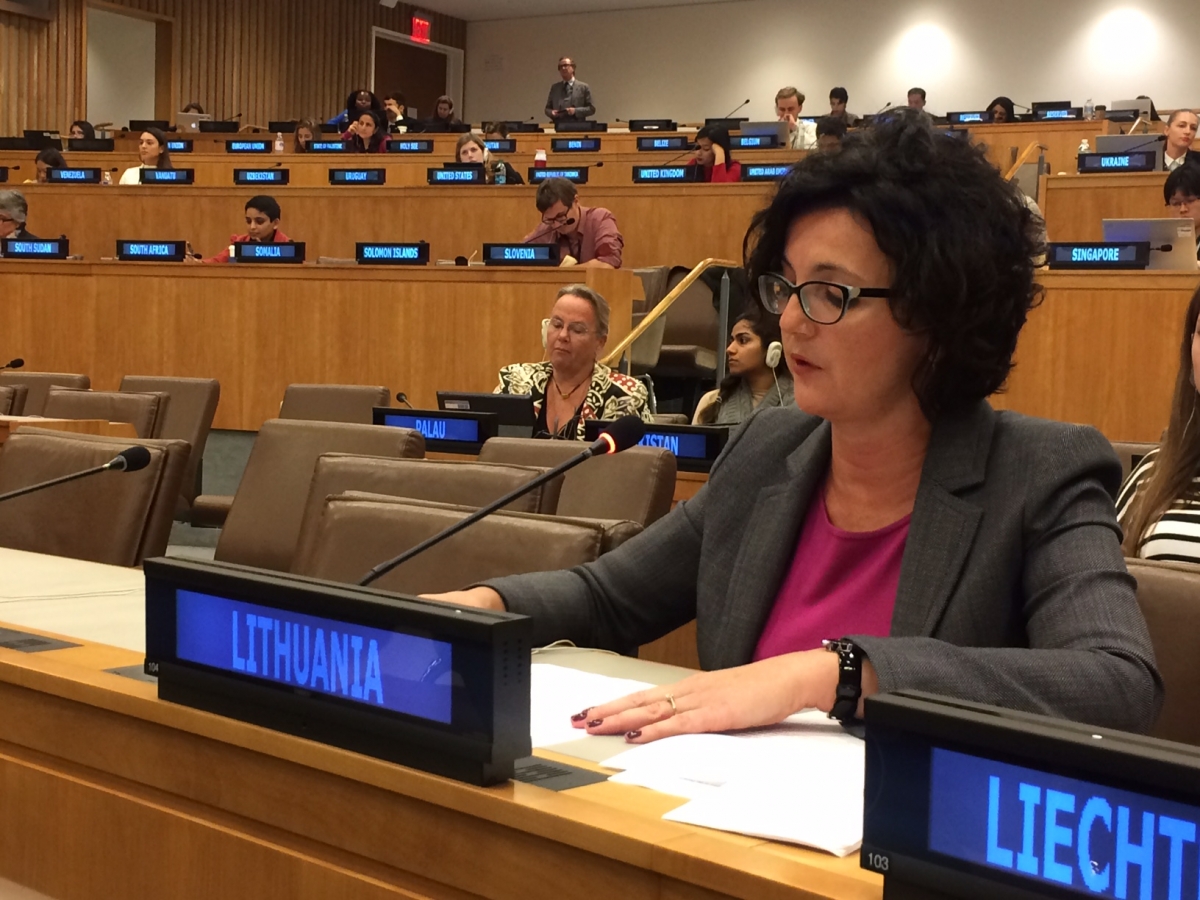
Madam Chair, At the outset, allow me to congratulate you on your election as the chairperson of the Third Committee of the 71st Session of the General Assembly. I would like to assure you and the bureau of the Committee of the cooperation and support of the Lithuanian delegation. Lithuania aligns itself with the statement delivered on behalf of the European Union. Madam Chair, The 2030 Agenda for Sustainable Development created a unique opportunity to address critical issues regarding gender equality and empowerment of women and girls. Moreover, we strongly believe that all of today’s greatest challenges – from climate change to fighting terrorism or ending the world’s deadliest conflicts – can only be resolved with full and equal participation of both genders. Thus, achieving gender equality and empowerment of women is both – a target and a prerequisite for successful implementation of Sustainable Development Goals.
Madam Chair,
We are convinced that only women free from violence and fear of violence can fully contribute to developing modern societies. Thus, prevention and protection of women and girls from all forms of violence remains a central concern to Lithuania. However, with 1 in 3 women worldwide experiencing abuse, violence against women can be compared to global epidemic.
Besides being a grave human rights violation and a form of discrimination, this scourge is also a serious drain on economic resources. Different aspects of the problem were analyzed a few weeks ago, in the margins of the UN General Assembly, in the high-level discussion hosted by the President of Lithuania. Participants of the discussion underlined that the cost of violence against women could amount to around 2 percent of the global gross domestic product (GDP). Existing data clearly calls for greater focus on the economic impact of violence against women on societies. We should unite international efforts in combatting this phenomenon in order to ensure our common success in implementing the Agenda 2030.
Tangible and measurable tools for prevention of violence against women were discussed at another event organized by Lithuania earlier this year during the CSW session. The discussion clearly showed that reliable statistical data on extent and severity of violence against women is an essential element of holistic and comprehensive strategies aimed at preventing and combating it.
On the national level, Lithuania remains strongly committed to implementing the National Program and the Action Plan for the Prevention of Domestic Violence and Provision of Assistance to Victims with an ultimate goal of improving assistance to victims and achieving zero tolerance towards domestic violence. The Law on Protection against Domestic Violence against Women has been effective for over four years in Lithuania.
Madam Chair,
I wish to take the opportunity to briefly share some good national practices in ensuring gender equality and women empowerment.
Firstly, National Programme on Equal Opportunities for Women and Men is based on gender mainstreaming approach, and is closely related to the goals of the Agenda 2030. Main priorities of the Programme are to promote equal opportunities for women and men in employment, to balance participation in decision-making, to promote gender mainstreaming, and to strengthen institutional mechanisms.
Ensuring properly functioning national gender equality mechanisms, as well as the adequate funding and capacity at all levels, is of the outmost importance. The Inter-institutional Commission on Equal Opportunities for Women and Men coordinates and monitors the implementation of the National Programme in Lithuania. We intend to strengthen the mandate of this Commission by increasing the level of representation of line ministries. The representatives of civil society had also been engaged in the work of the Commission since its creation.
Secondly, the new Labour Code of Lithuania adopted last September, enshrines the principle of respect for the employee’s commitments to his/her family and the work-and-life balance. It also foresees a possibility of a part-time work and teleworking, flexible and individual working regime, and additional guarantees for parents raising children.
Lithuania attaches great importance to combating gender stereotypes and ensuring gender equality in the field of education and science. The Guidance on Ensuring Equal Opportunities in Lithuanian Research and Higher Education Institutions was adopted to reduce gender imbalance in various fields of study. The criteria to check the textbooks and learning material of elementary education was developed with a view to evaluating whether they promote non-discriminatory treatment of women and men.
Madam Chair,
These are just a few practical examples of Lithuania’s engagement in promoting gender equality and empowerment of women nationally and internationally.
Let me conclude by reaffirming our strong commitment to this cause. We truly believe that only full engagement of all members of society – both men and women – can bring us to a truly sustainable future.
I thank you.
