


Statement by Lithuania at the UN General Assembly debate on sexual exploitation and abuse (on behalf of Lithuania, Latvia and Estonia)
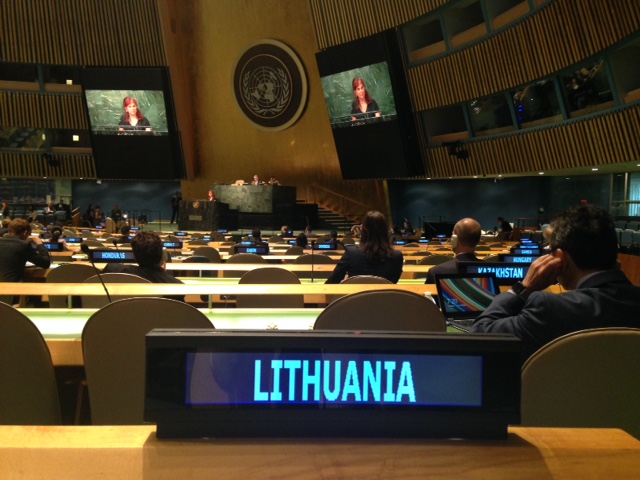
Mr. President, I have the honor to speak on behalf of Estonia, Latvia, and my own country Lithuania. Our delegations associate themselves with the statement made on behalf of the European Union. Let me start by thanking the President of the GA for convening this meeting. We are deeply concerned that despite the long declared UN zero-tolerance policy towards all forms of sexual exploitation and abuse by the United Nations and related personnel, sexual abuses continue to take place. It is appalling that those on a mission to protect civilian populations in crisis can be preying on the weakest and most vulnerable, compounding the suffering already inflicted on the victims of conflict and abuse.
Such behavior is a dark stain on the conscience of the UN. It tarnishes the good name of the thousands of peacekeepers and other UN staff who continue to serve in the most difficult of zones, including those who have lost their lives in the line of duty. It also puts at risk the lives of other peacekeepers in the field since such abuses create mistrust and animosity between peacekeepers and local populations. It is time to stop talking about the problem and act on it with determination and resolve. We all have a role to play in bringing SEA to end.
In this context, we appreciate the dedicated work of Ms. Jane Holl Lute, Special Coordinator on improving UN response to SEA. She has a formidable task, and deserves our full support and cooperation. Her briefing of May 13 was encouraging and showed sure commitment to tackling the scourge of SEA.
Furthermore, the adoption of the first Security Council resolution against sexual abuse by peacekeepers earlier this year was a welcome step. The Council, which mandates peacekeeping operations, has the responsibility for the forces it sends to the field and must make certain that the resolution is implemented in full.
SEA problem is not new. Ample recommendations exist on the subject as well as various lessons and good practices, which should be exchanged, analysed, and replicated. For example, systematic pre-deployment and continuous training of troops and personnel, including on human rights and protection of civilians; making sure that force commanders have prior peacekeeping experience; having daily unannounced checks of the location of contingent members (India); deployment of National Investigation Officers (NIO) as part of peacekeeping contingents (Morocco) or establishment of standby NIO teams (South Africa); vetting of troops for sexual abuse history. A lot depends on the personal leadership and determination of force commanders, as in the Malawi case quoted by Ms. Lute in her May briefing.
Assessing the risk factors associated with every peacekeeping mission is important. Furthermore, increased numbers of women peacekeepers and police, deployment of women’s protection and gender advisers, as well as human rights and gender awareness training, have all proven successful and should be further expanded.
It is crucial that all reported allegations are investigated fully and promptly. We welcome UNSG’s efforts to speed up the investigations and improve their quality. Viable complaints and disciplinary mechanisms must be vigorously enacted, to pursue accountability and to deter potential perpetrators. Some countries have conducted trials of abusers, including Egypt, DRC, Tanzania, and South Africa. This should become a regular practice, not an exception, by the TCCs and PCCs. National jurisdictions, which we all cherish and respect, cannot be allowed to serve as a shield behind which perpetrators of the heinous crimes of sexual exploitation and abuse could hide from justice.
Assistance/support should be available from the UN and regional organisations to TCCs and PCCs in pre-deployment and on-site training, as well as in developing adequate legal and judiciary instruments to tackle impunity for SEA, including through disciplinary actions and/or criminal accountability measures.
In addition better dissemination of information among the civilian populations is necessary; so that they know their rights and who to complain to if abuse does occur. Building trust between the UN present on the ground and local populations is crucial, so that the victims are not afraid to speak out and are protected from repercussions for speaking out against the abusers. We simply cannot build a case against the abusers if the victims are too afraid to identify those who abused them. Support and assistance to victims should be made a priority, and we welcome the operationalization of the Trust Fund for victims of SEA.
At the same time, the UN system needs to change how it views its whistleblowers. There should be no cover ups, no deadening silence and no repetition of stories like that of Kathryn Bolkovac who tried to investigate human trafficking during the peacekeeping mission in Bosnia-Herzegovina and lost her job; or Anders Kompass who was suspended for exposing the sexual abuse of children by peacekeepers in the CAR.
In conclusion, Mr. President, for the United Nations to retain its credibility and regain trust, including among those who have suffered, or have witnessed, sexual abuse by UN peacekeepers and staff, the latest SEA scandal is one too many. It is time to finally make sure that the zero tolerance policy is not merely a slogan we repeat, but also a comprehensive and vigorous action we take. Only through collective commitment by the UN and its Member States protection of civilians, justice to victims and accountability for violators can be ensured.
I thank you.
