


Statement by Minister Linkevičius at the panel discussion on Addressing the challenges to safety of journalists posed by terrorist threat
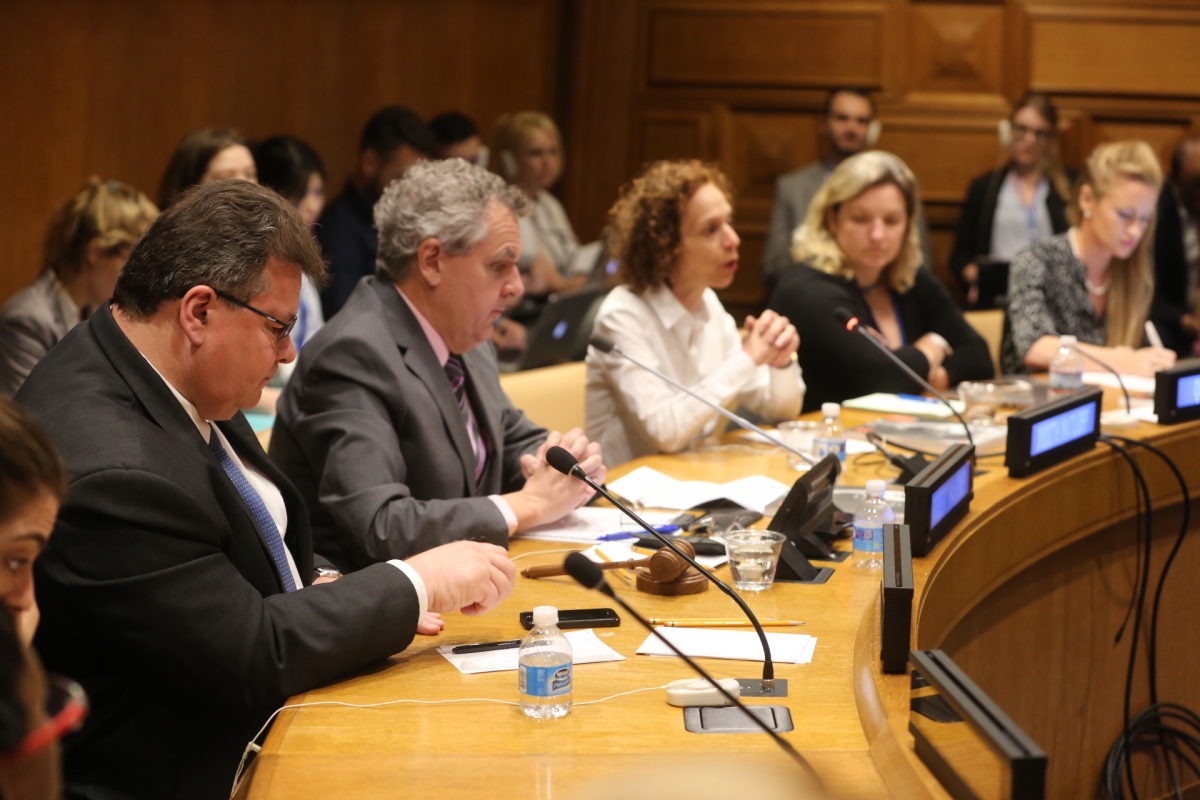
Ladies and Gentlemen, I would like to thank the Committee to Protect Journalists for their cooperation in organizing this panel discussion. I would also like to thank the panelists for accepting our invitation to speak at this event. It takes courage for journalists to work in zones affected by violence. They risk their lives to shine the light on the inhumane and brutal reality of armed conflicts. By exposing ongoing atrocities, their work enables the international community to mobilize and respond to the violations of international law and humanitarian crises.
As Mariane Pearl, widow of the American journalist killed by Taliban in Pakistan, said during the Security Council debate in May of 2015 “journalists everywhere are those single, determined individuals who increasingly are bearing the weight of our democracies on their own”. It is our responsibility to ensure their protection and safety.
In the recent years, the spread of terrorism and radical extremism has posed additional threats to journalists and media workers in conflict areas. Instead of telling the story, journalists themselves are becoming a part of the news as they suffer persecution, abductions, or killings. Attempts to silence them and to discourage others from reporting the crimes committed by terrorists and radical extremists happen on a daily basis.
More than 100 journalists and media workers are killed every year. According to the Committee to Protect Journalists, 28 journalists were killed in 2015 by terrorist groups such as Dae’sh and Al-Qaeda. More than a dozen others are missing and feared to have been executed.
With the rapid evolution of information technologies, it is not just the traditional journalists who face threats from terrorist groups. Individuals who contribute to the wider international making of news, bloggers, and independent reporters who disseminate information freely and directly by using the internet and social media are increasingly targeted, and their safety concerns need to be also properly addressed.
While we remember the courage of Daniel Pearl, James Foley, Kenji Goto, Ahmed Mahamed al-Mousa, Zaher al-Shurqat, Hinda Haji Mohamed, unfortunately, the deaths of many other freelancers, local journalists, and media workers reporting from terrorism- infested areas happen in anonymity, away from the eyes of the world. They too should be remembered. They too should be protected..
As journalists are targeted, pressured to leave dangerous zones, and forced to cover events remotely, areas under terrorist control risk becoming information black holes. We cannot allow this to happen.
At the same time, we have to make sure that terrorism charges are not used by individual governments as an excuse to clamp down on dissent and criticism. Freedom of information and freedom of expression are at the core of what makes us democratic societies and must be respected, even at times of crisis.
Lithuania is strongly committed to the cause of the protection of journalists. Last year on the Security Council my country submitted for adoption a new draft resolution on the protection of journalists in armed conflicts. Among other things, resolution 2222 strongly condemned attacks against journalists by terrorist groups and urged member-states to ensure accountability for crimes committed against journalists, media professionals and associated personnel working in war zones. It also stressed the specific threats faced by women journalists in the line of duty.
It is essential to translate that resolution into concrete actions aimed at developing comprehensive measures to address the safety of journalists. Lithuania welcomes the inclusion of the issue of the protection of journalists in the latest report by UN Secretary General on the protection of civilians in armed conflict. We believe that SG’s reports should continue to include substantive information on the protection of journalists, including on the challenges media workers face in areas controlled by terrorist or extremist groups.
When terrorists threaten journalists it is not only a threat against them. It is also a threat against all of us and our fundamental values and rights. Therefore, it is our common responsibility, to defend our core values and freedoms, and to make sure that our daily staple of the news does not come at the expense of journalist lives. That is why, I invite everyone today to share their insights and discuss the ways how we can protect the lives of journalists and protect our freedoms. If after this discussion we have one or two concrete ideas or commitments what we could do together for the safety of journalists, our gathering would be a great success.
I thank you.
Vidmantas Balkunas picture
