


Statement by the Republic of Lithuania at the 9th session of the Conference of States Parties to the Convention on the Rights of Persons with Disabilities
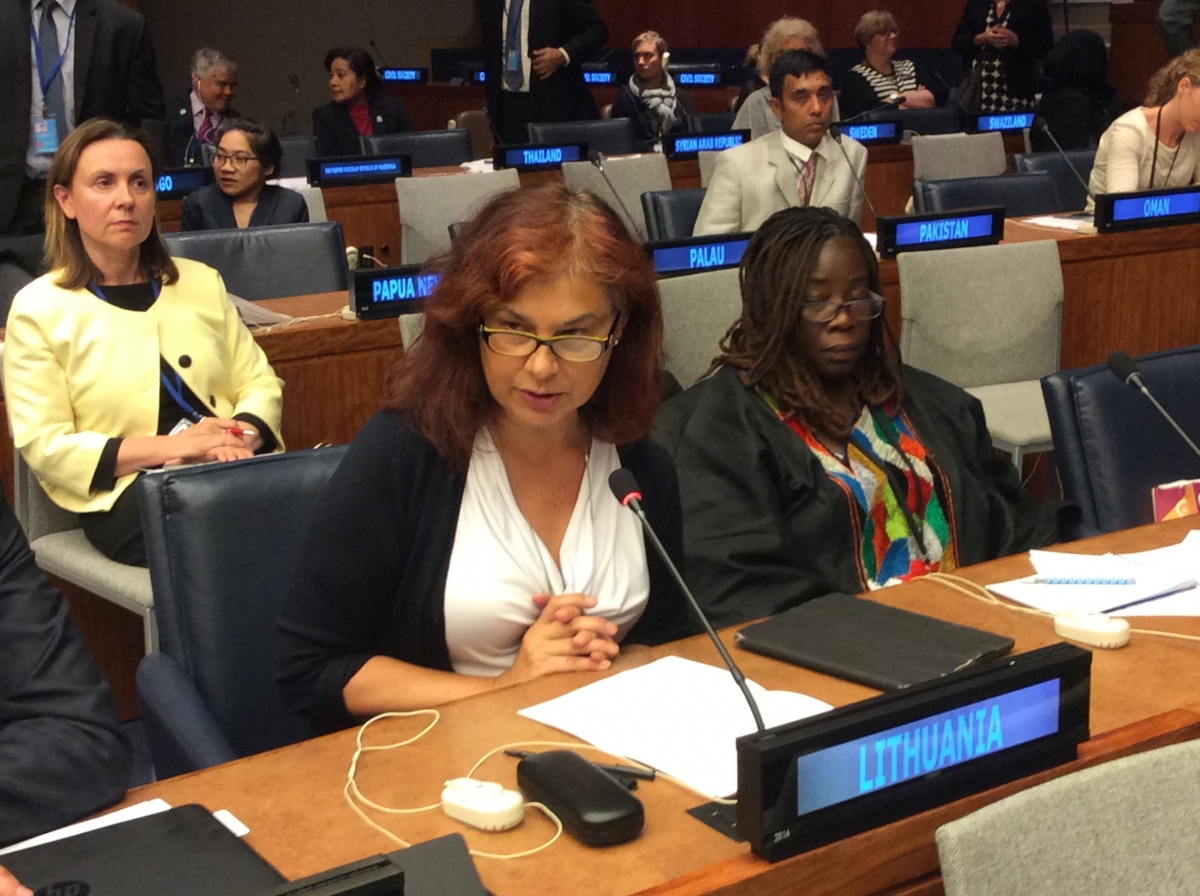
Mr. Chair, Ladies and Gentlemen, My delegation associates itself with the statement made on behalf of the European Union. 10 years since the adoption of the United Nations Convention on the Rights of Persons with Disabilities, this event offers an important opportunity to reflect on and share our experience in implementing one of the most important international documents in the field of disability.
Lithuania ratified the Convention and its Optional Protocol in 2010 and has taken active steps to implement their provisions. Both the government and non-governmental organisations representing persons with disabilities are included in the national mechanism for the implementation of the Convention.
This year CRPD discussed the first periodic report of Lithuania, which was prepared in close cooperation with non-governmental organisations.
The Committee welcomed Lithuania’s public awareness raising programmes aimed at changing the negative attitudes and stereotypes regarding disabilities; as well as the inclusion of organisations of persons with disabilities in the elaboration of the National Programme for Social Integration of the Disabled for 2013-2019 and a number of other initiatives.
The Committee submitted a number of useful country-specific recommendations aimed at ensuring equal opportunities for people with disabilities. To translate them into action, an implementation plan for these recommendations is being finalised. All of our main ministries and institutions responsible for the social integration of persons with disabilities will be directly engaged in implementing measures contained in the plan.
One of the key recommendations – the creation of an independent monitoring mechanism for the United Nations Convention on the Rights of Persons with Disabilities – is already being implemented. The Seimas of the Republic of Lithuania approved a draft amendment to the Law on Social Integration of People with Disabilities according to which one of the non-governmental organisations working in the field of protection of the rights of people with disabilities will be entrusted with monitoring implementation of the Convention.
To address the role of the family in the process of social inclusion of persons with disabilities, Lithuania has started implementing the Action Plan for Comprehensive Family Services that provides coordinated educational, social, health and legal assistance to families situations and aims at reducing social exclusion.
A draft of the Law of the Republic of Lithuania on the Fundamentals of the Protection of the Rights of the Child is currently discussed by the Seimas of the Republic of Lithuania. This law aims to establish a model for the implementation of preventive and social work with the child and the family. It would also prohibit any form of violence against children, including physical punishment, and define the concept of child abuse and its contents. An infrastructure of daycare centres for children with disabilities is rapidly being developed in Lithuania.
Lithuania is also taking steps to improve the physical infrastructure, transportation and information services, where obstacles remain for persons with disabilities. By adopting the Law on Social Integration of People with Disabilities, Lithuania is moving forwards in implementing a program for adaptation of individual housing and public premises to the disabled.
Mr. President,
One of the remaining challenges in implementing the Convention is assisting persons with disabilities in their integration into the labour market. Lithuania has developed active labour market policies such as subsidised employment and the creation of jobs through subsidies. These policies were introduced to encourage social responsibility and awareness among employers as well as to provide people with disabilities with the necessary support. Support for self-employment is provided for persons with severe disabilities who want to start their own business.
Obviously, more needs to be done, but persons with disabilities in Lithuania are increasingly able to access vocational training, acquire professional skills, and enjoy support for territorial mobility of the unemployed.
We shall continue to focus government policies in the area of social integration of people with disabilities on developing personal skills, promoting their social potential and their participation in the labour market, as well as their full enjoyment of all human rights.
Mr. President,
Protecting the rights of women with disabilities requires special attention as women often become victims of multiple discrimination, and are at greater risk of social exclusion and poverty. It is therefore important to take the necessary measures to support women with disabilities and promote their participation in economic and social life. The measures provided in the action plan for implementation of the 2015-2021 National Programme on Equal Opportunities for Women and Men are instrumental for implementing this goal.
Guaranteeing the rights of people with disabilities, and ensuring equal opportunities for all is becoming a mainstream policy in Lithuania. However, for this understanding to prevail in all areas of life, more progress is needed in terms of public awareness of disability issues, improved accessibility, justice, health care and other fields.
The process of implementing the Convention requires active involvement and participation of all government and municipal institutions, persons with disabilities, as well as civil society and non-governmental organisations.The Government of Lithuania will spare no efforts in working further on this matter.
