


Statement of Lithuania at the United Nations Security Council High-level Arria-formula Meeting on the 75th Anniversary of the End of WWII in Europe
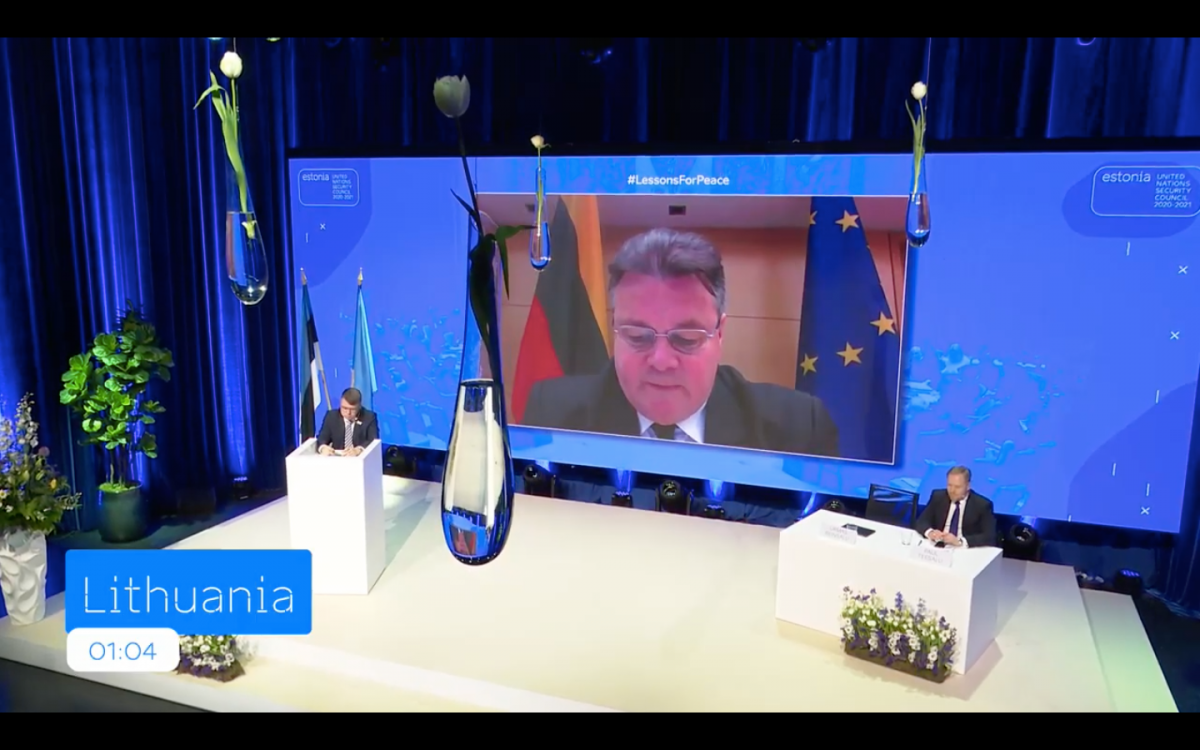
National statement delivered by H.E. Mr. Linas Linkevičius, Minister of Foreign Affairs of the Republic of Lithuania, at the United Nations Security Council High-level Arria-formula Meeting "75 Years since the end of the Second World War in Europe: lessons for the prevention of international crimes in the future, the responsibility of the Security Council'.
Mr. President,
I would like to thank Estonia for convening this most important meeting under these challenging circumstances. Allow me to pay tribute to the memory of all the victims of the most horrifying atrocities of our times.
On 8 May 1945, many European countries were liberated from occupation and the horrors of the Holocaust were ended. Unfortunately, the end of World War II in Europe did not bring freedom for all. Painful divisions, totalitarian oppression and more crimes against humanity continued. People of Lithuania and many other countries of Central Eastern Europe fell victims to Soviet repressions and deportations, were tortured and executed without trial. Up to 300 000 Lithuanians, were deported, exiled, or locked in Soviet gulags. Tens of thousands of our Freedom Fighters died in forests resisting the Soviet occupation and many dissidents suffered until we restored our independence. While honoring the victims of World War II, we also honor those who suffered and lost their lives for their countries, for their rights, and for their dignity after the War had officially ended in Europe.
Mr. President,
While recognizing what exactly happened in Europe in the middle of XX century, we must use every means to counter attempts to distort historical facts and whitewash crimes by the totalitarian regimes. The secrets behind Molotov-Ribbentrop Pact were one of the main causes of the outbreak of World War II. Doubting the real facts leads to return to the methods of division into spheres of influence, justifying incitement to hatred, rise of nationalism and aggression against neighboring countries.
International conference, recently held in Vilnius, was dedicated to historical traumas. As participants emphasized, to heal them we must recognize historical traumas, acknowledge their impact within societies and focus on current and future relationships between people and nations.
In addition, through promoting respect for international law, strengthening multilateralism and defending the universality of human rights we could make this world a more tolerant, free and peaceful place for all.
I thank you.
Vilnius, 8 May, 2020
